

On Oranges versus Ideas

I truly love my career – well, most of the time and in most aspects of it anyway. I enjoy the thrills of running my own consultancy firm and being in command of my destiny – even when (perhaps especially when) I need to react to the unexpected. It seems that I am at my very best when things are at their very worst, or when there is some other significant challenge where I have to make a bold and decisive decision (though not always the right decision).Many of my friends and colleagues have repeatedly told me that I am not happy unless I am feeling “on-edge” or “itching to get into the mix”.I guess that is why I never really enjoyed gambling at a casino. I mean, I gamble every day in the running of my firm – sometimes mountains of money are involved. And the thought of “putting a hundred bucks on black” (or the like) is just not thrilling to me.
 I believe my greatest personal asset is that I am more in-touch with my weaknesses than I am in-touch with my strengths. There is a Dos Equis commercial where “the most interesting man in the world” gives advice on careers. He says, “Find out what you don’t do well – and then don’t do that thing”. I believe I have this trait down to perfection.
In fact, some folks (haircut aside) have made the comment that I am Forrest Gump personified
I believe my greatest personal asset is that I am more in-touch with my weaknesses than I am in-touch with my strengths. There is a Dos Equis commercial where “the most interesting man in the world” gives advice on careers. He says, “Find out what you don’t do well – and then don’t do that thing”. I believe I have this trait down to perfection.
In fact, some folks (haircut aside) have made the comment that I am Forrest Gump personified – more lucky than smart (being generous, here).I disagree… You see, I believe it’s because I just don’t know any better. I don’t have a pre-conceived prejudice or idea of how things should work (at least most of the time).Many people talk about “thinking outside the box”. But to me that means that they already conceive that a box exists – complete with walls that have to be considered.I, on the other hand, never recognized the box in the first place. This means that the world is a blank canvas upon which dreams are made into reality and where the trappings of the “real” or the “past precedents” are irrelevant to the present and future.Certainly, one should learn from the lessons of the past and consider their impact, however, one should not let these lessons dictate (or perhaps even influence) or otherwise confine what the future-state could be – or even should be.I had a Philosophy Professor in University once tell me and the rest of the students in the class to “Question everything!” I asked, “Why?”This all comes down to the secret to success (at least mine). I know what I am good at and I know what I am not good at. I make certain that which I am not good at is augmented by those who possess the strengths I lack. I don’t hesitate to reach-out. And I question EVERYTHING.I am constantly seeking new ideas and to engage in open debate in order to increase my knowledge, to generally better myself and to increase my network of learn’d individuals of whom I might be able to leverage to further my endeavors (and the endeavors of my friends, resources, and clients). I try to always be there for those who might benefit from where I personally excel (or where I might know of someone who may be of help).In May, we held a series of Symposia across the European Union entitled “A Frictionless World” – with venues in London, The Hague, Warsaw and Frankfurt.Each Symposium consisted of a Keynote Speaker – usually a regional industrial champion who embraces the pursuit of Operational Excellence as a means to improve their personal circumstances and the circumstances of their colleagues and organizations. In addition to the Keynote Speaker, we had three additional speakers from various consultancy firms. XONITEK acted as host and did not deliver a talk at any of the venues.I was asked time and again, “Why aren’t you speaking at any of these events?” And, “Why are you letting your competitors speak at your events?”The answer is simple. We already know what we know and it is more advantageous for us to learn about what we do not know; to learn of the “unknown, unknowns” – to paraphrase Donald Rumsfeld.Besides, the probability of actually getting into a competitive situation with any of these other consultancy firms – where we are each going after the same opportunity with the same contacts in the same company – is nearly nil. What is more likely is that we would “team” together to create a powerhouse of an offering whose combined talent and expertise is greater than each individually.You see…“If I have one orange, and you have one orange – and we exchange oranges – we each leave with one orange.But if I have one idea, and you have one idea – and we exchange ideas – we each leave with two ideas.”Now, that’s food for thought…
About the Author
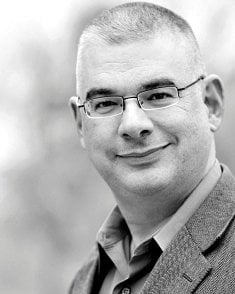 Paris is the Founder and Chairman of the XONITEK Group of Companies; an international management consultancy firm specializing in all disciplines related to Operational Excellence, the continuous and deliberate improvement of company performance AND the circumstances of those who work there – to pursue “Operational Excellence by Design” and not by coincidence. He is also the Founder of the Operational Excellence Society, with hundreds of members and several Chapters located around the world, as well as the Owner of the Operational Excellence Group on Linked-In, with over 25,000 members.For more information on Paris, please check his Linked-In Profile at: http://de.linkedin.com/in/josephparis


